Showing posts with label Plant Science Internship. Show all posts

Saturday, December 22, 2007

Pearl Beach Field Trip Recce

Yesterday, Louisa and Peta--a couple of my Herbarium colleagues--and I went to Pearl Beach on the NSW Central Coast to check out the place we're staying during the upcoming Plant Science Internship field trip in January. Since I'm going to be cook, I needed to know how well equipped the kitchen is. It's got a big old stove that should happily serve our needs. I just hope my culinary skills do too!

Pearl Beach is a beautiful spot, given to being a holiday house mecca for wealthy celebs, but more interesting for us as an ecologically diverse site for botanising. It's close to coastal heaths, mangrove swamps and temperate rainforest. (Also to leeches, ticks, mosquitoes, sandflies and snakes.... Oh my.)
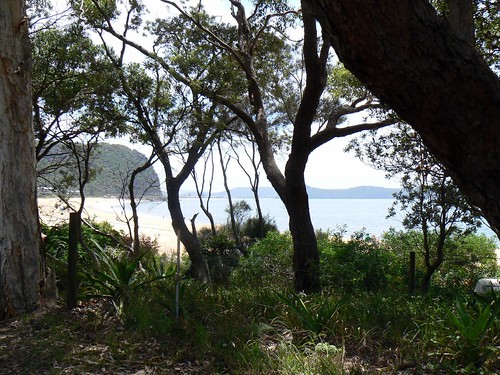

The tree on the left is Melaleuca quinquenervia, Paperbark Teatree, and below, its bark....


This species is typical of the area, growing in coastal swamps and on lake margins on the East Coast of Australia north from Sydney. It's unfortunately become a serious weed in wetlands outside Australia, including in the Florida Everglades, where it grows into huge forests across hundreds of thousands of acres, forming impenetrable monocultures. With the classic irony of the way we screw things up, in some parts of Australia it's becoming quite vulnerable.

Traditionally, Indigenous Australians used the trees for a range of purposes:
  • The bark peels off in strips and has many uses ranging from wrapping food for cooking to making bandages and disposable raincoats. The bark can be used to make containers for food and water storage and for mending holes in canoes.
  • A liquid made from the leaves can be used as a wash. The leaves can also be boiled to make a pleasant tea.
  • The nectar-rich blossoms can be soaked in water to make a sweet drink.
  • All species of melaleuca can be used to treat symptoms of colds, flu and sinusitis by inhaling the steam from boiling or burning the leaves. The young leaves can also be crushed in the hands and released oils inhaled deeply to relive headaches, blocked sinuses, coughs and runny noses. Source: Botanic Gardens, Sydney.
I'll do my best to document as much as I can of our field trip. It's going to be great fun, collecting specimens, doing plant surveys, IDs with the keys and microscopes at night, swimming.... oh, and cooking! So watch this space.

And here's a joke, told to me by a plant scientist who is not a molecular biologist:

A molecular biologist was driving through the bush, and came across a farmer herding his sheep along the road. He stopped to let them pass, and got into conversation with the farmer.

"Nice mob of sheep you've got there."

"Yeah. They're good eating."

"Tell you what," said the molecular biologist, "If I can tell you how many sheep you've got, you give me one."

"Okay," said the farmer. "I'm always up for a wager. Go ahead."

"Eighty-six".

"That's pretty good, mate, how'd you work that out?" asked the farmer.

"Oh, in my line of work, you need to be able to quantify things pretty quickly," said the molecular biologist.

"Fair enough," said the farmer. "Help yourself." And the molecular biologist did.

"How about another bet?" said the farmer. "If I guess what your line of work is, you give it back to me."

"All right," said the molecular biologist.

"You're a molecular biologist."

"How'd you know that?" asked the molecular biologist.

"Put down my dog and I'll tell you."

Wednesday, December 19, 2007

Flannel Flower Gloat Moment

The photo I posted here a while back of the flannel flower (Actinotus helianthi) I'm growing has been chosen for today's Botany Photo of the Day published by UBC Botanical Garden and Centre for Plant Research.

Which is nice.

Just as jolly is that I've sold my first photo. The Herbarium had an art exhibition over recent weeks, "Our Hidden Talents", to which the staff were encouraged to contribute. I entered four photos, and someone liked this one enough to part with ready cash for it. Heck.


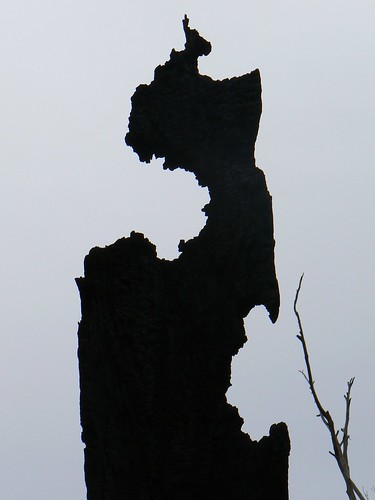
I took this photo, "After the Fire", in February this year, while on the NSW Herbarium Plant Science Internship's field trip to the NSW Central Coast. It's a burnt-out tree in Awaba State Forest.

Tuesday, October 30, 2007

2008 Plant Science Internship, National Herbarium of NSW--Applications open!

The next Internship (Jan-Feb 2008) is now calling for applications. Anyone who's read my blog and website accounts of this will know how much I absolutely adored it. I am not exaggerating when I say it changed my life. It certainly led to my current job and to my committing to a B.Sc in Conservation and Biodiversity.

If you or anyone you know can spare 7 weeks in Jan-Feb next year to get advanced work experience and training in botanical science, here it is! (Oh, and that's me, third photo down, pretending to mount a specimen. So to speak.)

I'm going on the Internship's Central Coast field trip. My boss said to me, "We can't take you as a scientist, because you're not one yet, but would you like to be the cook?" So I'll be there, wearing the wacky, zany novelty BBQ apron, and hopefully doing a little botanising on the side.

Seriously, this is the greatest thing for someone with a passion for Australian plants, ecology and biodiversity. Pass it on!

Sunday, July 08, 2007

Plant Science Internship Website Update

Well, if this Wahlenbergia communis flower doesn't get your juices running, frankly, nothing will.

Isn't it a stunner? This is one of the photos on my updated Plant Science Internship pages. I've added a section on our Mount Annan Botanic Gardens field trip. Hope you'll take a look.

Tuesday, June 05, 2007

Website update

Just a quick note to let you know I've updated my Growing Passion website, including photos of the pond I'm constructing, and stuff about the Plant Science Internship Program.

Sunday, April 29, 2007

Back at the Blogface

Photo: a swamp wallaby in our new garden.

Finally, the prodigal blogger returns. Sorry about the delay. It's been quite a year and it's only April! First the Herbarium Plant Science Internship (details to come, I promise!), the slings and arrows of outrageous house purchasing, the move, the unpacking.... Photos of the house, both before and after the move, are here.

I've quit my horticulture course, somewhat alas. To be frank, the Internship thoroughly spoilt me, and horticulture just isn't enough any more. I'm studying to get ready for the science degree I mentioned last post, I'm working one day a week at the Botanic Gardens' Plant Disease Diagnostic Unit, and I am hoping to score a two day a week gig at the Herbarium working on Australia's Virtual Herbarium soon.

The Plant Path Lab is an utter wonder. I get to do wizzo things like examine nematodes from soil samples to check for the bad guys; prepare cultures of sundry microfungi and identify them under the microscope; and lately, even participate in polymerase chain reactions to do DNA identifications of fungi; and I'm shortly to go on field trips to National Parks with one of the Lab's scientists, collecting soil samples to search for phytophthera (an exceeding nasty micro-organism that attacks the roots of many native plants). I'll be doing the GPS measurements, drawing on one of the zillions of fascinating things I learned during the Internship. And I do some of the grunt work of labs: pouring out agar, doing the dishes, that sort of stuff. I'm working with some wonderful people, like Sue Bullock and Ed Liew. I am learning so much each week, my brain is bursting. Partly with joy.

And, of course, there is the new garden, which is filling me with bliss. Each day reveals a new delight. I keep finding tiny plants that aren't there because someone planted them. They just live there. And the animals! There are the swamp wallabies which visit daily (and have already eaten some of my newly planted seedlings. Grr.), and a boggling range of birds, including the Wonga pigeon, the Barking Owl, the Eastern Whipbird, the Spotted Pardalote, and a large range of parrots. And frogs! So many frogs. There are a couple of creeks behind our house that come alive with frog calls after rain. It'll be fascinating to see what moves into my new pond. When I've constructed it....

So far, the gardening has been limited to creating a vegie patch and planting a range of herbs (I'll start some pages with photos on my main website soon), and this weekend, we cleared out a garden bed in front of the verandah, removing various introduced species such as a large camellia and a hydrangea. I've planted Pandorea pandorana to grow up a trellis Martien made me, Acacia terminalis, Zieria prostrata (a threatened species) Lomandra fluviatilis (also a threatened species), Lomandra longifolia, Goodenia ovata, and sown Dichondra repens seed as a ground cover. Photos soon.

But I'm neglecting the gastropods here. Take a look at these gorgeous creatures: Triboniophorus graeffei. They're endemic to Australia and are, as you can see, quite remarkable. These two are engaged in humpy-bumpy. I guess it's pretty obvious why they might be called Red Triangle Slugs.


More soon!

Cheers,

Margaret

Sunday, February 04, 2007

Flicking flowers, Fire and the Future

Sorry. That level of alliteration really is quite unforgivable.

The first F relates to my photo of a Stylidium productum flower I posted here previously. It's just been published on Botany Photo of the Day, here. Thanks, Daniel! If you're into plants and you haven't yet subscribed to BPoD, then you should. Most of the photos there put mine to shame, but I'm pretty happy with those Daniel's published: Dendobium speciosum and Telopea speciosissima 'Wirrimbirra White'.

The slogan of Botany Photo of the Day is "In Science, beauty. In beauty, science. Daily." I love that. It distills what Dawkins talks about in Unweaving the Rainbow.

F #2 is fire. As I was travelling up to the Central Coast on a Herbarium internship field trip, we passed the bushfires that were besetting Mount Kuring-gai, less than a kilometre from our new home. This is a photo taken on 22 January, looking towards Sydney from Staples Lookout on the Kariong-Woy Woy Road, showing the smoke from the fire.


Such an ominous sight, and I hated being away from my family while we all worried.

We visited Mount Kuring-gai yesterday, to see the damage. While from the ridge you can see a lot of blackened damage from spot fires, the areas around the houses have only been browned by back-burning by the Rural Fire Service. It's distressing to know that the fire was caused either by an arsonist or by an idiot careless with a cigarette butt, but fortunately the fire near us wasn't too intense or extensive. Already there are signs of regeneration: lomandra appearing from the earth, xanthorrhoea leaves exploding from charred stumps. By the time we move in, there will be a lot of action. By the time the fire was controlled, a total of over 1,000 hectares were burnt. Hopefully most of the animals got out of the way....

But I'm afraid I'm not able to post any more photos from my Herbarium exploits yet. So many photos, so much to write, so little time! I'll catch up as soon as I can.

And the final F is my future. My experiences at the Herbarium have thoroughly crystallised my plans for the rest of my working life. A while ago I realised that horticulture wasn't going to be enough for me. Much as I love the practical stuff, I was craving more knowledge and science than my courses were designed to provide. Now I know where I want to go, and it's into botany and biodiversity.

So in the second half of this year, I'm going to go back to Macquarie University, my alma mater, and start studying for a B.Sc in Biodiversity and Conservation. I'll be studying part-time, so am going to look for part-time work in hort/plant science to pay for it. (It's a shock to the system for a girl who did her Arts/Law degrees during the halcyon post-Whitlam era, when tertiary education was entirely publicly-funded. Now, it's expensive. Yikes.)

Catch up soon!

Cheers,

Margaret

Friday, January 05, 2007

A New Home, a New Garden!

Well, I'm as happy as a Frenchman who's just invented self-removing trousers.

We're buying a home in Mt Kuring-gai, on the northern outskirts of Sydney. It's a beautiful place, backing onto Ku-ring-gai Chase National Park. Secluded, quiet, at the end of a cul de sac, and teeming with nature. It's the sort of place I've always dreamed of living in. During one of our inspections, a wallaby was grazing in the front garden!


Read about it and look at more photos here. You can see the region on Google Maps. (If it doesn't default to it, click on "satellite" so you can see all that gorgeous bushland!)

One of the most exciting aspects is its garden. It primarily has native plants but a few interlopers are there which I'll be excising. (Like the agapanthus. Can you believe that someone would plant agapanthus right next to a national park?)

In preparation, I've been making a list of all the native plants I'll be taking to plant out. Some are tube-stock I've bought or been given, some are in large pots and well established, and some I've propagated from seed or cuttings. The Lomandra 'Tanika' is in the ground, but I'll be digging it up--it's such a beautiful specimen I can't say good-bye to it.

Here is the list:

Acacia amblygona, Acacia fimbriata, Adiantum hispidulum, Archontophoenix cunninghamiana, Asplenium bulbiferum, Backhousia citriodora, Calothamnus quadrifidus, Cassinia denticulata, Clematis gentianoides, Crowea saligna, Darwinia citriodora, Derwentia perfoliata, Doodia aspera, Eucalyptus 'Summer Beauty', Eucalyptus macrocarpa, Goodenia ovata, Grevillea caleyi, Grevillea olivacea x preissii, Grevillea rhyolitica, Grevillea speciosa, Hardenbergia violacea, Hibbertia scandens, Kennedia prostrata, Kennedia rubicunda, Lepidozamia peroffskyana, Leptospermum scoparium, Lomandra 'Tanika', Lomandra longifolia, Melaleuca bracteata, Melaleuca linearifolia, Melaleuca thymifolia, Myoporum floribundum, Ozothamnus diosmifolius, Pandorea pandorana, Stenocarpus sinuatus, Stylidium productum, Stylidium adnatum, Telopea speciosissima, Telopea speciosissima 'Wirrimbirra White', Westringia fruticosa, Xanthorrhoea australis and Zieria smithii.

I've also a wish list of a few plants that are local to the area:

Clematis glycinoides Old Man's Beard
Dianella prunina
Actinotus helianthi
– Flannel Flower
Dampiera strictaBlue Dampiera
Hypolepis muelleri – Harsh Ground Fern
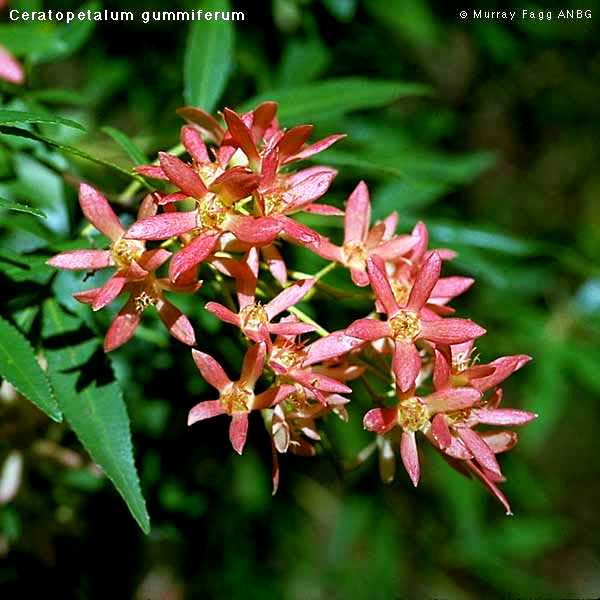
Ceratopetalum gummiferum – NSW Christmas Bush
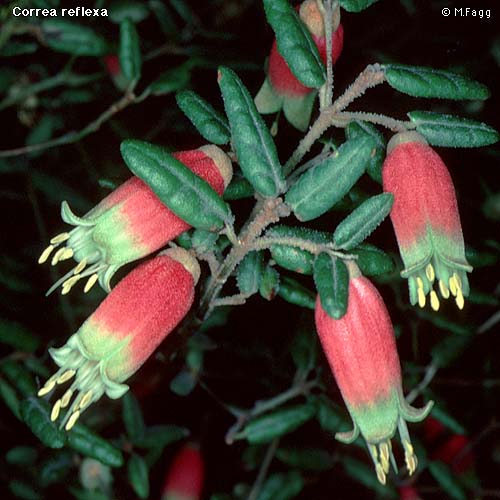
Correa reflexa
Grevillea buxifolia
– Grey Spider Flower


I'm intending to do a proper garden scale plan, as we learned in the hort course last year. I've made notes on the habit, size, aspect and colouration for each species, to ensure they're happy and look as good as possible. It's a huge project, but I can think of none I'd rather do.

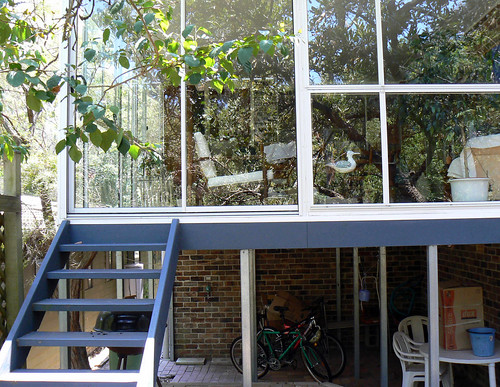
At the back of the house, under the sunroom is an open space which I'm commandeering to use as my hort headquarters. I'll put in shelves for my stuff, a whiteboard to keep records of propagating activities and a potting bench. Close by will be my greenhouse.


Naturally, one of the first things we'll be doing is setting up a water tank, and I'll use drip irrigation throughout the areas that will require watering, like the vegie patch. (Once established, the native plants will have to fend for themselves.) And, of course, there's be a frog pond.

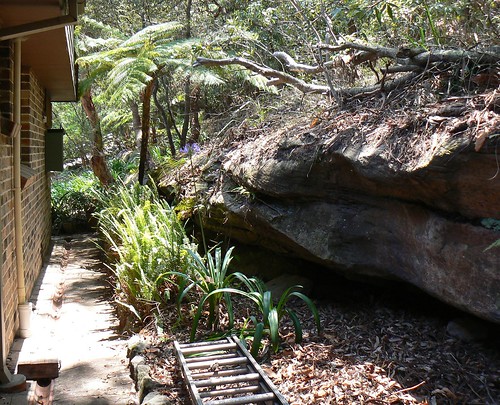
There is an area between the house and a sandstone embankment that is just made to be a rainforest area, perfect for my ferns, tree ferns, zamia, elkhorns and asplenium. (Cool cave, huh? I wonder who lives there. And why does it need a ladder?)


We'll be moving in at the beginning of March. I haven't much time to think about it, though, because my Plant Internship starts on Monday and finishes the week before we move. More on the Internship soon.

2007 is starting spectacularly well for us. Let's hope it keeps going that way.

Oh, and happy new year!

Cheers,

Margaret

Thursday, November 23, 2006

Plant Science Internship

I am absolutely over the moon. I've been accepted into the Plant Science Internship Program at the National Herbarium at the Sydney Botanic Gardens!

The internship takes place over January and February next year, full time. (This means that I'll have to miss my first month of my TAFE studies, but I think I'll be able to manage that okay with the support of my hort friends.)

From the Program's website:
This program offers undergraduates and recent graduates in the plant sciences advanced working experience in a leading scientific institution. The work program is supported by task-specific training and a professional-level introduction to key areas in Australian plant science and conservation. Specific training is given in skills for job-seeking and higher study....

The program is for students at the end of second or third year, and recent graduates, in botany, ecology, forestry, general biology (with plant interests), scientific horticulture, and related subjects. The program will benefit those seeking professional or technical careers in plant sciences or conservation management....

Interns work full-time on a voluntary, unpaid basis, assisting scientific staff on work of real scientific value. In return, Interns receive extensive practical training in botany, plant conservation, collections management, and job-seeking in the scientific workforce....

Training sessions are led by professional scientists and technicians from the Botanic Gardens Trust and other institutions. Training complements and extends that given at university....
  • Work sessions
    • Interns work in teams under staff supervision on routine and advanced tasks of specimen preparation, plant identification, collections management, and some research assistance.
    • We attempt to accommodate interns’ interests, but allocation to work teams and tasks is at our discretion. The scientific context of all work is made clear – you will be making a real contribution to the running of the Herbarium and its programs, and the skills you acquire will be applicable in many other jobs, especially in science and conservation....

  • Training About 40% of time is spent in training sessions. Again, these will be relevant to a wide range of science jobs. You will become familiar with:
    • key sources of information on the Australian flora
    • plant identification resources
    • key sources of information in conservation science and policy
    • principles and practice of the curation of scientific collections

  • Seminar sessions will focus on theoretical and practical issues in botany and conservation, including current major research programs.

  • Field training will include specimen selection and collection, field data recording, and permit and access protocols.
In other words, bliss on a stick.

I fully intend to write here about my experiences at the Herbarium. And take lots of photos with the trusty camera.

Callooh! Callay! O frabjous day!