At the end of November, my contract with Australia's Virtual Herbarium at the National Herbarium of NSW expires as a result of that great constant in the world of science: funding running out. So I've been quietly hunting for new work, and verily, it has come to pass! Next year I'll be starting a job at Macquarie University as a part-time research assistant for six months or so, working with Associate Professor Brian Atwell of the Biology Department, who is doing research into Australian native rice (Oryza species).
It fits brilliantly with my plans: I'll be able to work in between lectures and pracs; it'll mean no more commuting to the city; it's hands-on work; it's potentially important research in terms of high protein crop development in a world of hungry people and changing climate; and best of all, I'll be doing Real Science!
But first, I have to finish this semester.... Exams loom. So excuse me if I continue to be a bit remiss in looking after this blog. See you when I come up for air again.
Sunday, October 26, 2008


Friday, September 05, 2008
Muogamarra Nature Reserve
I notice that I've been a bit lax with the blog again. For those twisted folk who come to read it, my apologies. But I've been busy on the side of the angels, working hard at university, up to my eyebrows in protein synthesis, stomatal guard cells and sexual self-incompatibility in plants (which I guess stops them from getting hairy palms).
Last weekend, we did take some time out, however, to spend a day walking in Muogamarra Nature Reserve, just north of here and just south of the Hawksbury River. Muogamarra is part of Ku-ring-gai Chase National Park, but a very special part. It's closed to the public all but 6 weekends of the year, in spring when the wild-flowers are at their most spectacular. A huge array of species, from Acacia, Grevillea, Boronia, Telopea, Bankia, and various pea flowers, all combining to create the most absurd display of colour.
I hope these images will give a sense of its magnificence.
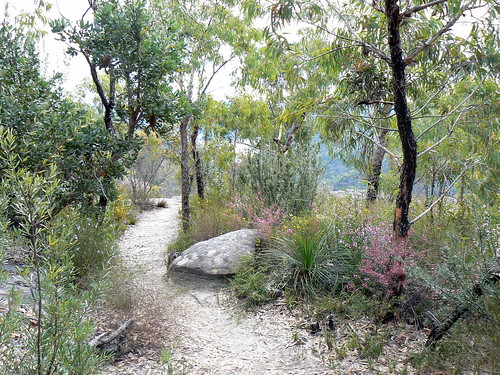
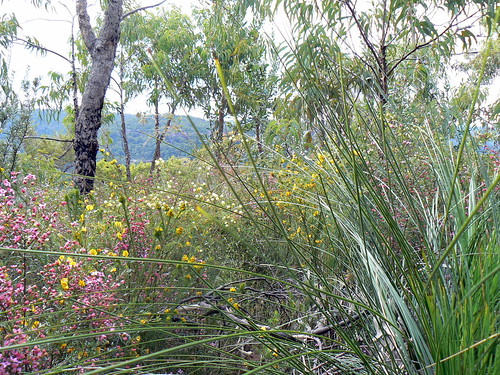
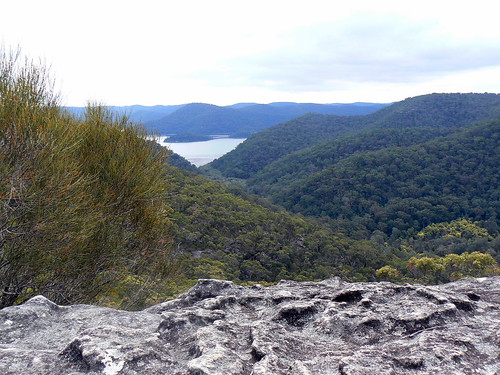
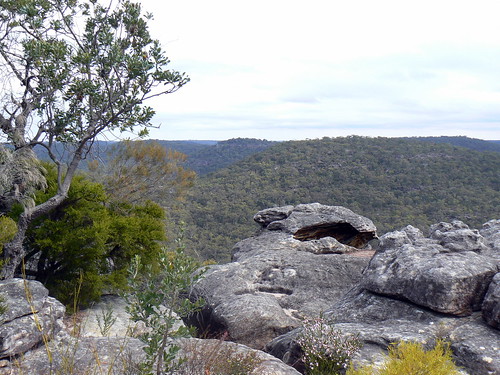
Last weekend, we did take some time out, however, to spend a day walking in Muogamarra Nature Reserve, just north of here and just south of the Hawksbury River. Muogamarra is part of Ku-ring-gai Chase National Park, but a very special part. It's closed to the public all but 6 weekends of the year, in spring when the wild-flowers are at their most spectacular. A huge array of species, from Acacia, Grevillea, Boronia, Telopea, Bankia, and various pea flowers, all combining to create the most absurd display of colour.
I hope these images will give a sense of its magnificence.
Wednesday, July 30, 2008
Birds!
For my birthday (Happy Birthday, me!) my parents gave me some money to spend as I wished, so I ordered three native bird nesting boxes from La Trobe University and they arrived today. Of course, there are plenty of tree hollows out in the National Park and we do have lots of birds visiting our garden, but I'm keen to have them nesting here so we can watch them.
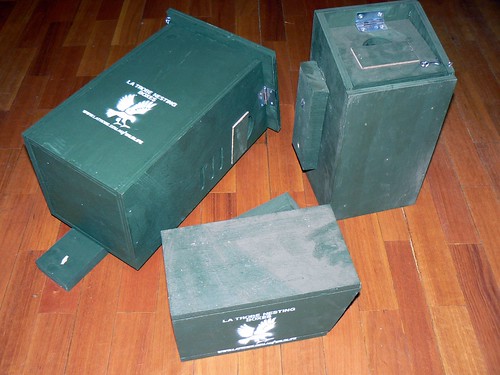
One's for rosellas or lorikeets; one for large parrots; and one for pardalotes. The parrot boxes both have "exotic bird excluders", the thin pieces of wood partially covering the entrances. Parrots like to chew open entrances to their nests, while exotics can't, and won't fit in. The pardalote entrance is too tiny for other species.
These are the birds most likely to move in, just in case you're unfamiliar with them. I've seen all of them in our garden over the last year.


Yellow-tailed Black Cockatoo,
Calyptorhynchus funereus

One's for rosellas or lorikeets; one for large parrots; and one for pardalotes. The parrot boxes both have "exotic bird excluders", the thin pieces of wood partially covering the entrances. Parrots like to chew open entrances to their nests, while exotics can't, and won't fit in. The pardalote entrance is too tiny for other species.
These are the birds most likely to move in, just in case you're unfamiliar with them. I've seen all of them in our garden over the last year.
Yellow-tailed Black Cockatoo,
Calyptorhynchus funereus


Rainbow Lorikeet,
Trichoglossus haematodus
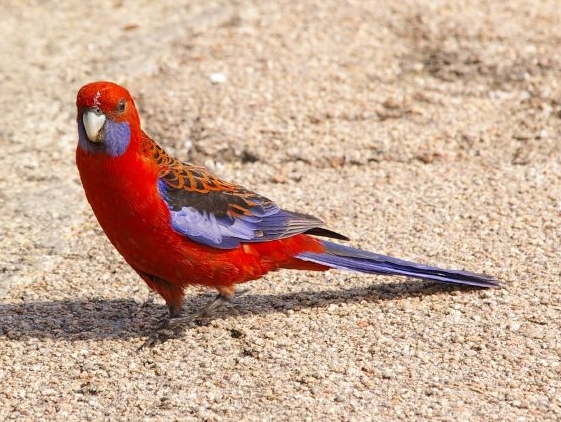
Crimson Rosella, Platycercus elegans

Trichoglossus haematodus
Crimson Rosella, Platycercus elegans
Eastern Rosella, Platycercus eximius
Bird images: Wikimedia Commons.
I'll post images of the boxes in situ, once we've done the ladder thing, and of course post updates when there's avian activity.
Bird images: Wikimedia Commons.
I'll post images of the boxes in situ, once we've done the ladder thing, and of course post updates when there's avian activity.
Sunday, July 27, 2008
Biodiversity
This clever image, "Species-scape", I found on one of my favourite blogs, Catalogue of Organisms (but it's also to be found here and here. I don't know who created the original.)
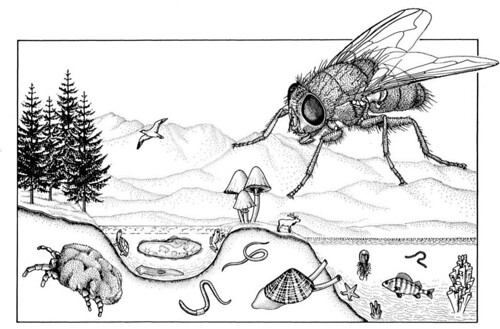
It's a graphical image of various groups of organisms represented at sizes relative to the number of described species in that group.
It reminds me of the delightful quotation attributed to J.B.S. Haldane: God, if he exists, has an inordinate fondness for beetles.
(While there are more arthropod species than species of other animals, within insects, there are more beetles than any other species. Sorry, fly. You must be in the graphic only because of your undoubted personal allure.)
It reminds me of the delightful quotation attributed to J.B.S. Haldane: God, if he exists, has an inordinate fondness for beetles.
(While there are more arthropod species than species of other animals, within insects, there are more beetles than any other species. Sorry, fly. You must be in the graphic only because of your undoubted personal allure.)
Subscribe to:
Posts (Atom)