Tuesday, February 22, 2011

Tom Paine's Ghost: Post with the Most!

A great blogging competition is afoot! Over at Tom Paine's Ghost, Kristopher Hite has announced the second annual Post with the Most event. From his blog:
A $100 cash prize will be awarded for the most powerful blog post freely available out there on the interwebs.

Post content is limited only by the bounds of imagination.
Keep in mind Tom Paine's Ghost was founded amidst a battle to defend freedom of the press and we hope to echo that theme throughout our pages.
Submissions will be selected and judged on the basis of four criteria:

1. Clarity
2. Originality
3. Integration (at least three forms of media would ideally be utilized, images, text, movies (you tube or vimeo), audio, etc.)
4. Power (the post's ability to motivate readers to action).

Last year, the wonderful Christie Wilcox of Observations of a Nerd won the award with her post, Reflections on the Gulf Oil Spill -- Conversations with my Grandpa, and you can see some other entries here.

So support good blogging, and either enter your own work or pass this on to someone you know who deserves the glory!

Sunday, January 23, 2011

Cryptostylis subulata

Native ground orchids can be contrary beasts. Since I last blogged about Cryptostylis subulata (Large Tongue Orchid) growing in our garden four years ago, there have been none in flower here... till this week:
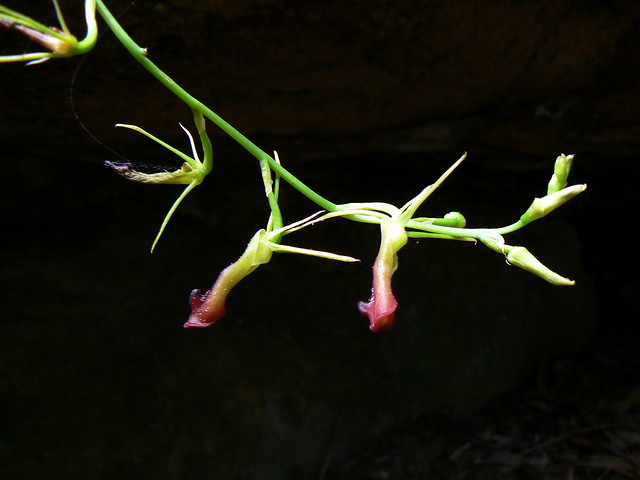

Cryptostylis subulata


This specimen is growing on the edge of a sandstone platform, the flowers hanging down over the cave beneath.

There is much that is remarkable about C. subulata. As with the other species of the genus endemic to Australia, it is exclusively pollinated by the male ichneumon wasp Lissopimpla excelsa (the dupe wasp). The orchid flower mimics a female wasp, not only through its appearance, but also by exuding a chemical counterfeit copying the pheromone of the female wasp. The male tries to mate with the flower--even to the point of ejaculation--and in doing so, transfers pollen.

This sexual deception is an extraordinary example of an exploitative symbiosis. Many plants engage in deception to trick pollinators into transferring gametes for them, and it is particularly common among orchids. There are cases of orchids emulating brood sites, food, and in at least one curious case, a marauding bee. Real bees will attack and brush against the flowers of Oncidium hyphaematicum as they wobble in the breeze, the pollen adhering to their bodies for transport to the next orchid.

Orchids also have very specific mutualistic relationships with fungi. Their seeds are minute and lack endosperm--the portion of the seed that provides food for the growing plant embryo. They are entirely dependent on fungi for energy at this stage, and later, form crucial relationships with mycorrhizal fungi for nutrients. The relationship between the evolution of pollinator deception, fungal symbionts and orchid diversity is an area of research rich with promise.


References:

A. C. Gaskett, C. G. Winnick, M. E. Herberstein (2008). "Orchid Sexual Deceit Provokes Ejaculation". The American Naturalist 171 (6)

A. C. Gaskett, M. E. Herberstein (2010). "Colour mimicry and sexual deception by Tongue orchids (Cryptostylis)". Naturwissenschaften 97: 97–102

Tuesday, December 28, 2010

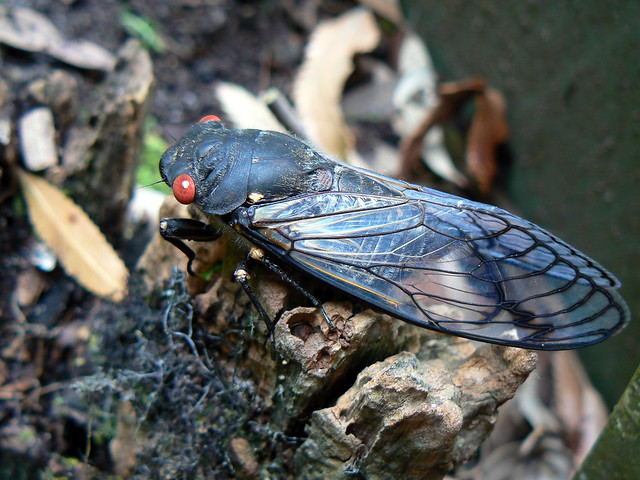
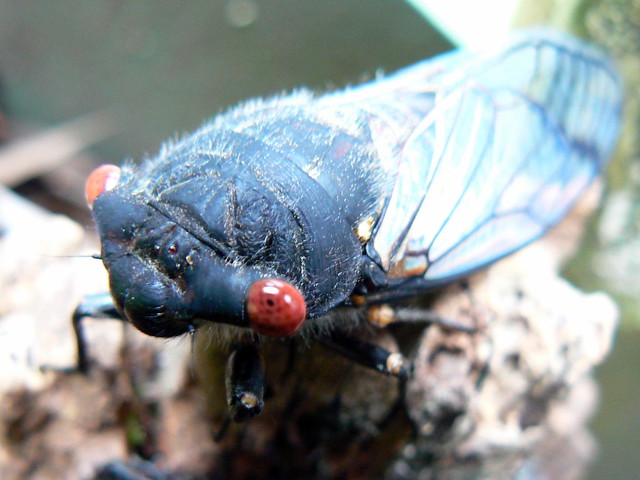
Redeye Cicada

Was just weeding in the garden, and encountered this, recently emerged from its shell: Psaltoda morens, the redeye cicada.

Cicada, newly emerged from shell


Cicada, newly emerged from shell

Ceratopetalum gummiferum: New South Wales Christmas Bush

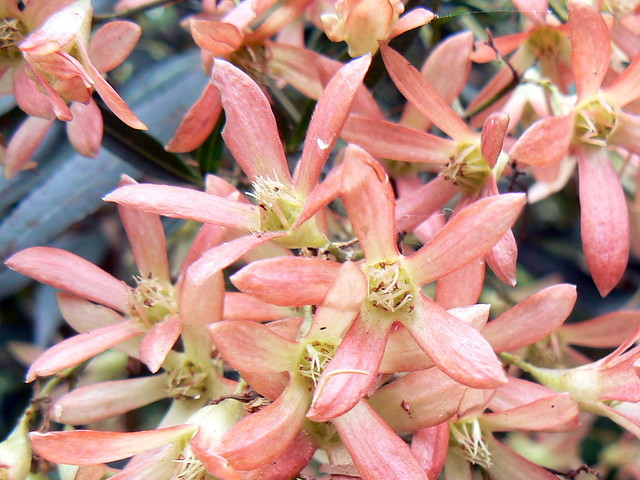
Dotted through bushland in summer in Sydney is the New South Wales Christmas Bush, Ceratapetalum gummiferum, its distinctive red colouring contrasting with the greens of foliage and whites of Eucalypt flowers. It's frequently cultivated, and many people decorate their houses at Christmas with sprays of it.

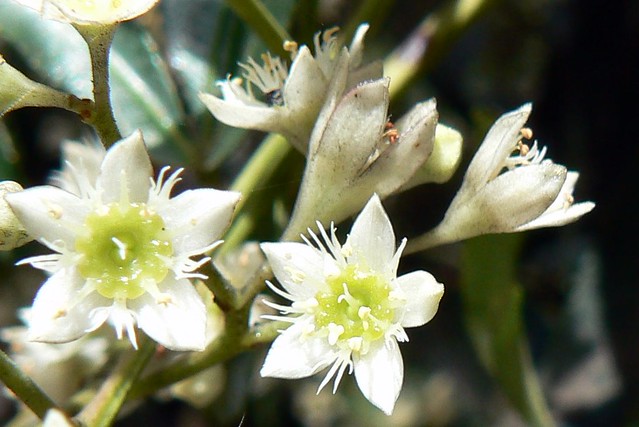
The red comes not from the flower petals though, but from the sepals. The small white flowers emerge in spring, but as the flowers begin to fruit, they fall off and the sepals elongate and turn red.

Ceratopetalum gummiferum - flowers
Flowers in spring

Ceratopetalum gummiferum
Flowers in summer

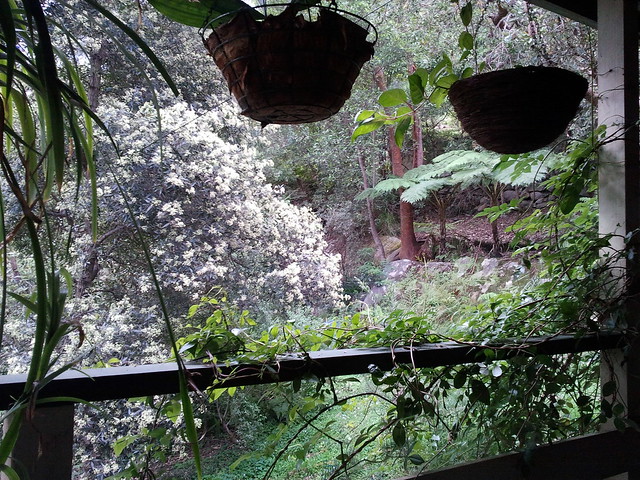
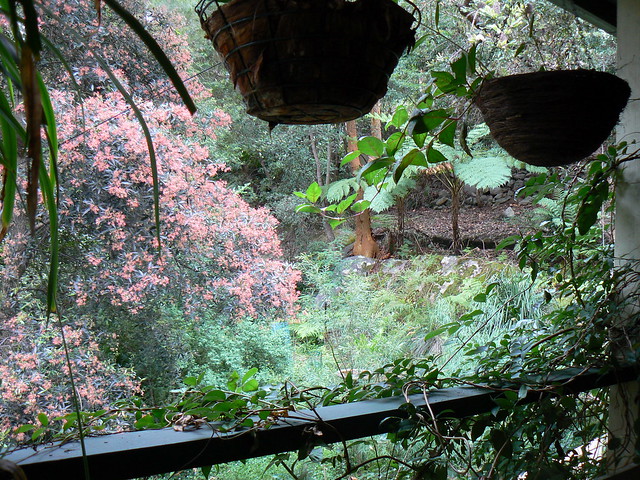
Our front verandah is one of my favourite spots to sit and read, or just to gaze out at the birds and the plants. The changing palette of the Christmas Bush adds to the appeal.

Ceratopetalum gummiferum
Spring


Ceratopetalum gummiferum
Summer

Have a great summer (or winter!) celebration, and I hope the new year brings you happiness and good health.