Showing posts with label Ceratopetalum gummiferum. Show all posts

Tuesday, December 28, 2010

Ceratopetalum gummiferum: New South Wales Christmas Bush

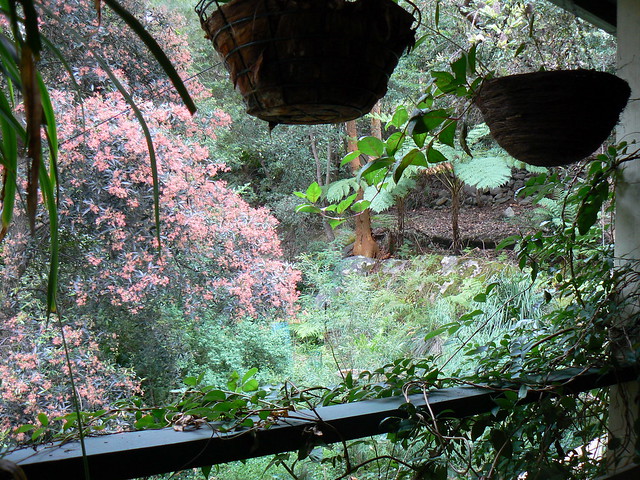
Dotted through bushland in summer in Sydney is the New South Wales Christmas Bush, Ceratapetalum gummiferum, its distinctive red colouring contrasting with the greens of foliage and whites of Eucalypt flowers. It's frequently cultivated, and many people decorate their houses at Christmas with sprays of it.

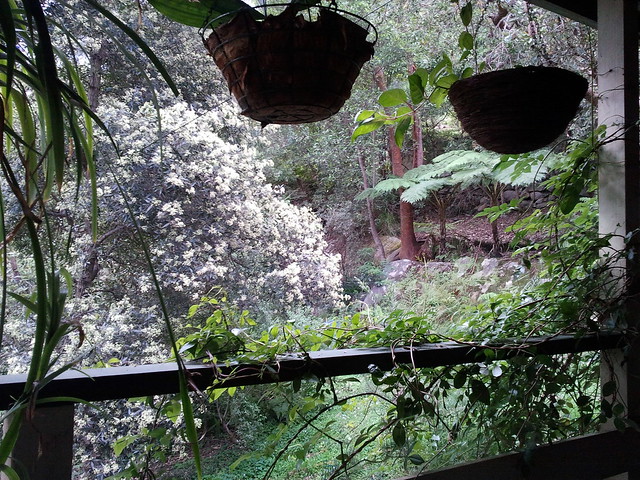
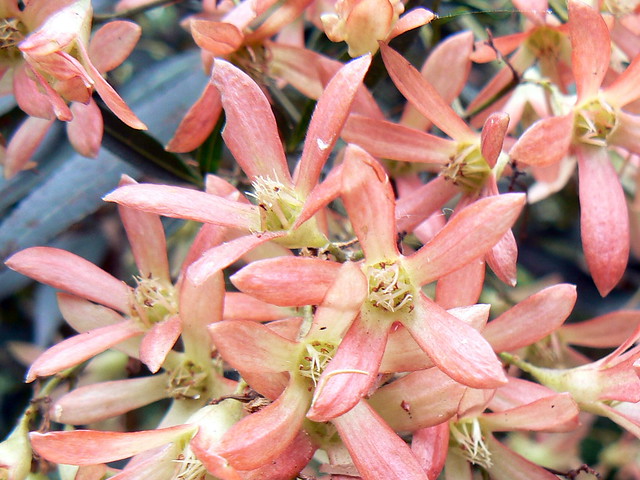
The red comes not from the flower petals though, but from the sepals. The small white flowers emerge in spring, but as the flowers begin to fruit, they fall off and the sepals elongate and turn red.

Ceratopetalum gummiferum - flowers
Flowers in spring

Ceratopetalum gummiferum
Flowers in summer

Our front verandah is one of my favourite spots to sit and read, or just to gaze out at the birds and the plants. The changing palette of the Christmas Bush adds to the appeal.

Ceratopetalum gummiferum
Spring


Ceratopetalum gummiferum
Summer

Have a great summer (or winter!) celebration, and I hope the new year brings you happiness and good health.

Friday, December 28, 2007

Spring flowers, summer edition.

A few weeks ago, I posted photos of inflorescences of Banksia serrata and Ceratopetalum gummiferum from our garden, with the promise of updated images as they matured.

Here they are:

The small flowers within the banksia inflorescences are hugely attractive to local birds, particularly tiny pardalotes and wrens. In a few months, they'll have formed into follicles on the woody axis. They'll eventually open, releasing seed, but that process is much assisted by the heat of bushfire.


As you can see from the earlier photo of this plant, the flower has changed from white to red. In fact, the red "petals" are actually the bracts, which remain on the flower well after the petals have gone. The bushland here is dotted these flaming red trees, and are very much a part of a Sydney summer, hence the common name of Ceratopetalum gummiferum, New South Wales Christmas Bush.

Frog update: I've seen some tadpoles in the pond! Don't know what species, but I don't think they're Limnodynastes peronii (which is the frog I heard calling there recently) because its spawn is readily identifiable, floating in a mass on the water surface. I didn't see any spawn at all, which suggests it was submerged. I guess I'll just have to wait till they grow up to find out what they are. Deeply good.

STOP PRESS: The male Brush Turkey (Alectura lathami) who lives near us was just in the back garden, with a mate! I've posted this pic before, but here he is again. Just imagine him now: much the same, but with a big grin on his face. :)


Who's got a girlfriend, then?

I'll go and visit his mound soon. When she's laid her eggs, she'll bugger off and it'll be his job to tend the mound, maintaining it at the right temperature, till the eggs hatch. Then they're on their own.
Sunday, November 11, 2007

Spring Photos from the Garden.

Today, after a few days of solid and very appreciated rain, I ventured into the garden, where I took some photos of spring fare.

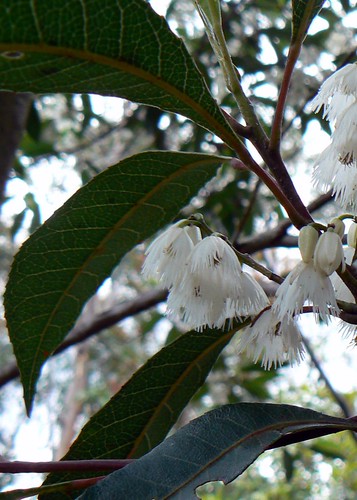
This is Elaeocarpus reticulatus, also known as Blueberry Ash, Ash Quandong, Blue Olive berry, Fairy Petticoats, Fringe Tree, Koda, Lily of the valley Tree and Scrub Ash. Obviously when it's been observed by white folk, they've been rather taken with it and have coined lots of names. I didn't even realise this was in the garden till I saw the flowers!


We've a lot of mature Banksia serrata growing. It's astounding how such ancient looking trees, with their knobbly, solid bark, can produce soft new leaves and these extraordinary flower cones each year. This inflorescence is very immature. I'll take another photo when it's older.


Actinotus helianthi, or Flannel Flower, is local to the area, but this is one I've planted.


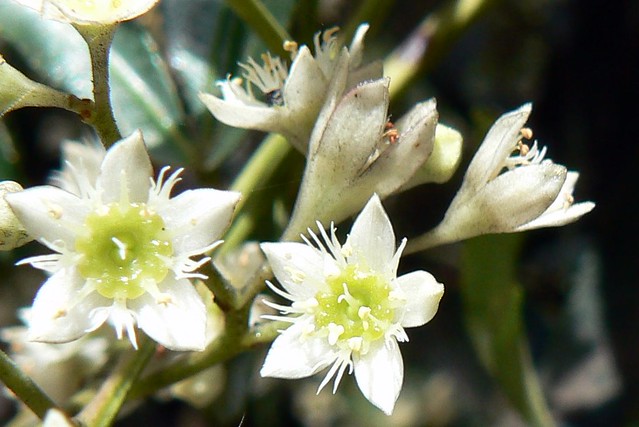
Ceratopetalum gummiferum is the New South Wales Christmas Bush. The flowers are white, but they're followed, at around Christmas time, by persistent red sepals, which bathe the tree in colour. I'll follow this photo up too!