Saturday, May 01, 2010

The Forest of Sabine: a perfect symbiosis!

I have a confession to make. Over the last year or so, the demands of study and work plus my allergies to ticks, leeches and many pollens have kept me from giving the attention to our garden that it needs and deserves. My negligence has been compounded by a higher-than-normal rainfall over summer.

The result?

Bracken.

Vast tracts of bracken.

From verandah.

That disc-shaped object in the foreground of our front garden is a drowning bird bath. Many of the plants I've put in have struggled to get enough light to survive.

Bad, naughty, wicked Margaret.

But a month or so ago, I was in a queue for coffee at Macquarie, and noticed a woman standing near me whom I recognised by sight.... Perhaps a biology post-grad? So we started chatting, and I asked her how her research was going. Good, she said, but she was having a problem. She needed a site in Sydney to grow some plants for her PhD experiment and was having trouble finding one. What sort of site did she need, I asked. Oh, something near bushland, sandstone substrate, sandy low-nutrient soil. Hmm, I mused. How much land? Enough to plant around eighty plants, ranging from trees to shrubs, all Sydney natives.

And thus began the perfect symbiosis. The PhD student is Sabine Nooten, and here she is:


Sabine is doing her doctorate with Professor Lesley Hughes (the Head of the Department of Biological Sciences), in the Plant-Insect Interactions and Climate Change Ecology Lab (PICCEL). You can read about her research here. As part of her work, Sabine is attempting to predict aspects of insect herbivory in the future: how plants and insects will interact as a result of climate change when Sydney's climate gets as hot as it is currently near the NSW/Qld border. She's been growing huge numbers of specimens at Macquarie University's Plant Growth Facilities (where I've studied and worked over the last year or so) for her various sites, and in the last few week or so, she and sundry colleagues/friends have been planting many of them in our front garden. This will be her control for the experiment. First, of course, she had to ensure that the soil was right. Not too many nutrients, to make it representative of the natural soils of Australia. Unsurprisingly, it passed the test. 

(Side note: Australia's soils are really, really old. The last Glacial Maximum (ice age) ended around 10,000 years ago. Glaciers scraped the surface off the bedrock of Europe and North America, so all the soil that has been deposited there subsequently is really a bit of a baby. Australia, by contrast, has had a relatively stable geology for many millions of years. We don't have much topsoil, and what we do have has been subject to massive erosion and has been leached of nutrients. Our flora has evolved to deal with this, which is why, for example, Australian plants are intolerant of what in Europe and North America would be normal levels of phosphorus. Hence "native plant fertiliser"--low on the stuff that hurts our plants.)

Sabine and her mates have cleared the bracken and planted a number of species, most of which are indigenous to our general area of Sydney:
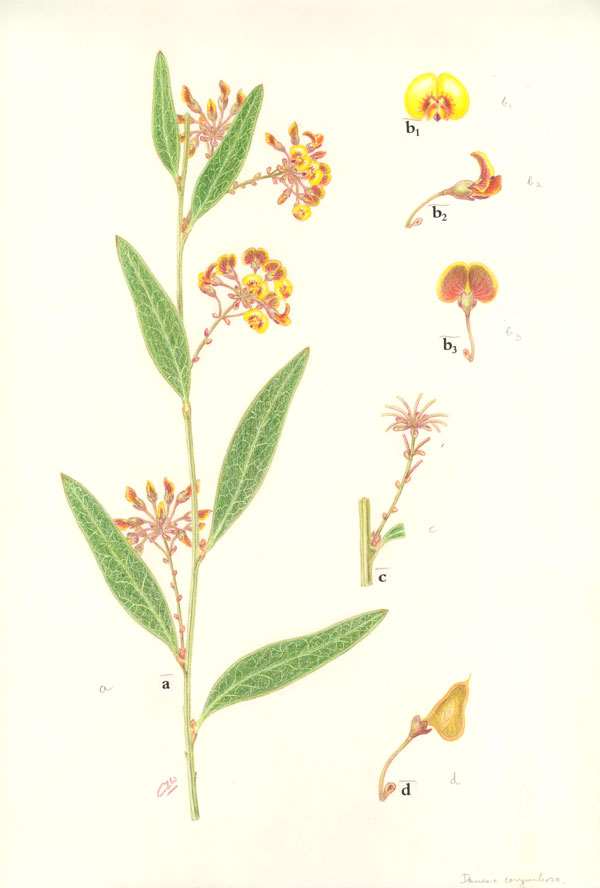
  • Angophora hispida (Myrtaceae), Dwarf apple or Banda in Cadigal (an Aboriginal language of Sydney). A mallee or small tree to 7 metres high.


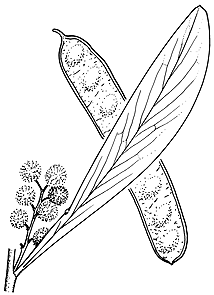
  • Acacia obtusata (Fabaceae), Blunt-leaved Wattle. 0.5-3 metres high. (Couldn't find a decent photo of this online. Once Sabine's flower, I'll take a pic!)
  • Hakea gibbosa (Proteaceae), Needlebush. Shrub, 1-3 metres high. 

This species is in the same genus as a plant I recently propagated from seed, and am now growing in the garden, Hakea sericea. Both have similar large, tough seed-pods and seriously sharp, hard leaves.
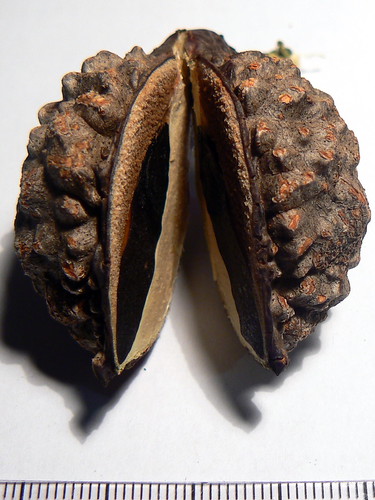
Hakea sericea fruit
mm
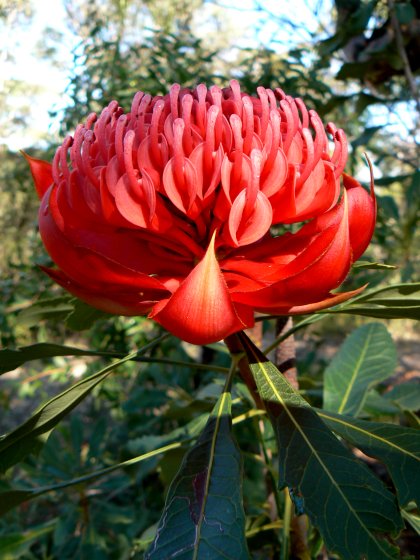
Telopea speciossima

And this is what the front garden looks like now:

From verandah
From verandah.

From driveway
From driveway.

Sabine is delighted to have a place to grow her plants where they're protected from vandals/wandering drunks/morons who don't quite understand how precious a PhD experiment is, and where they'll be watered and generally loved. (The fencing is to keep out the dreaded Swamp Wallabies.)

But she can't possibly be as thrilled as I am. All these plants! The bracken gone! What will essentially become a forest in our front yard!

Once the experiment is finished (in around 18 months), I'm going to put in some local understorey plants. But I'm quietly hopeful that they'll emerge naturally. The soil is full of seeds of local plants, just waiting for the right conditions to germinate and grow. Finally, I think they might just get their chance.

So how win/win is all that?!

I'll update the process, once the plants start to take off. Watch this space, come spring.

Sunday, April 11, 2010

The Evolution of Chloroplasts: endosymbiosis and horizontal gene transfer

Chloroplasts are the machines of life, upon which we heterotrophs (organisms which can't create their own food, but instead rely on eating other organisms) depend. Their evolution massively transformed the earth itself, changing the air by dramatically increasing atmospheric oxygen essential for animal life, and providing an energy source.


Micrograph of the cells of a moss species, Plagiomnium.
The round green organelles are chloroplasts. [Source]

All green plants contain chloroplasts, amazing molecular machines which use carbon dioxide, water and photons from sunlight to create sugar and oxygen. The oxygen, so precious to us, is in fact a mere waste product of the reaction. This is the process called photosynthesis:


The story of how plants evolved the ability to perform this chemical feat begins around 3.6 billion years ago. That was before multicellular organisms appeared, and indeed, before eukaryotic cells evolved. (A eukaryotic cell is one with a membrane-bounded nucleus (containing DNA) and various organelles performing specialised functions.) The only living organisms that existed were the prokaryotes, which were much less complex. Prokaryotes have a very different type of DNA structure. Instead of being wrapped around histones in the familiar X-shaped chromosomal form, they are circular. 

One type of prokaryote, cyanobacteria, developed the capacity to use energy from the sun to power its metabolic needs. We see the ancient remains of these early autotrophs today, in the form of stromatolites, layered, fossilised structures like these at Lake Thetis in Western Australia:


                                      [Source]

The ability to use sunlight as a means to make their own food provided photosynthesising prokaryotes with a huge competitive advantage, and they rapidly populated the earth's oceans and lakes. The oxygen they emitted as a waste product led to what's known as the Great Oxidation Event, around 2.4 billion years ago. We can see evidence of this event in rocks from the era. Here is sedimentary rock containing black-banded ironstone, showing the oxidation of iron.


                                    [Source]

About 2.7 billion years ago, another remarkable change was occurring: the evolution of eukaryotic cells. This entailed the process of endosymbiosis [Gk: endon "within", syn "together" and biosis "living".] In endosymbiosis, one organism engulfs another and incorporates it into its own body or cells. It's important to remember that this takes place by invagination: think of pushing your finger into the side of an inflated balloon. Your finger is surrounded by both its own external membrane (your skin) as well as the membrane of the balloon itself. Now imagine (and sorry, the metaphor gets a bit gross at this point!) that your finger falls off and the balloon seals itself up again. Now your finger is inside the balloon, wrapped in a double membrane. That endosymbionts evolved by this process is evidenced by the fact that they have a double membrane, including their own original form that resembles the ancestral bacterial surface. 

Below is a graphic I've put together to show the two crucial stages in the incorporation of photosynthesising prokaryotes into proto-eukaryotic cells, leading to a true eukaryotic cell with both a mitochondrion and a chloroplast. 


Although only green plants possess chloroplasts in their cells, all animal and plant cells have mitochondria, a specialised organelle that oxidises (burns) sugar and provides energy for cells to work.

Note that the DNA of the proteobacterium and the cyanobacterium are circular, compared with the condensed nucleus of the proto-eukaryotic cell. This structure continues down the lineage. Mitochondria and chloroplasts have their own, circular DNA that replicates independently from the DNA in the cell's nucleus. 

The first organisms resulting from the endosymbiosis of cyanobacteria were the green algae, the direct ancestors of all modern plants.


Chloroplasts, able to perform feats well beyond human technology--the efficient splitting of water into hydrogen and oxygen, and the synthesis of sugars from water and carbon dioxide to chemically store energy--are extremely complex structures. A crucial protein in the creation of sugar (during the Calvin Cycle phase of photosynthesis) is Ribulose-1,5-biphosphate carboxylase oxygenase, commonly known as RuBisCO.

Over the course of plant evolution since the original endosymbiotic events, interactions have occurred between genes in the chloroplasts, nucleii and mitochondria. Some genes have disappeared because they are redundant to the organism (both doing the same work in synthesising proteins), and others have physically moved from one organelle to another. The latter process is known as horizontal (or lateral) gene transfer (HGT). Thus, in RuBisCO, some of the protein chains are synthesised by the DNA in the nucleus (nDNA), while others are synthesised by the DNA in the chloroplasts (cDNA). In an astoundingly intricate dance, the cellular machines work together to create what is one of the most important organic molecules on earth. Without it, we and all the other animals on earth wouldn't be here.


Before I finish this rather long post (and if you're still reading, thank you!), I just wanted to mention the mysterious case of the klepto-plast slug.


                                   [Source]

This gorgeous creature is Elysia chlorotica, the Green Sea Slug. And it photosynthesises! Just think about that for a moment. An animal capable of making its own food by using light from the sun. Wouldn't you love to be able to do that? It'd certainly solve the global energy crisis, but perhaps a green hue wouldn't suit everyone's taste.

The Green Sea Slug eats algae, and incorporates the algal chloroplasts into the spaces between its own cells. It differs, however, from the endosymbiosis of plant chloroplasts, because in this case there is no horizontal gene transfer. Once the algae in the slug die, that's it. The slug needs to eat more to keep photosynthesising. It's tempting to think that this might be an evolutionary stage towards a truly autotrophic animal, but apparently too much damage is done to the chloroplasts as they travels through the gut of the slug, and the chloroplasts can no longer replicate themselves. 

Pity. 


This post was adapted from a genetics seminar I recently gave as part of my studies. If you'd like to read more on the topics raised, here's some further reading:

Archibald, J.M. & Keeling, P.J. (2002) Recycled plastids: a 'green revolution' in eukaryotic evolution. Trends Genet 18:11:577-584.

Delwiche, C.F. (1999) Tracing the thread of plastid diversity through the tapestry of life. The American Naturalist 154 Supplement:S165-S177.

Gould, S.B., Waller, R.F. & McFadden (2008) Plastid Evolution. Annu. Rev. Plant Biol. 59:491-517.

Keeling, P.J. & Palmer, J.D. (2008) Horizontal gene transfer in eukaryotic evolution. Nature Reviews: Genetics 9:606-618.

Keeling, P.J. (2009) Role of horizontal gene transfer in the evolution of photosynthetic eukaryotes and their plastids, in Gogarten, M.B. et al. (eds.) Horizontal Gene Transfer: Genomics in Flux, vol. 532: 501-515.

Martin, W. & Schnarrenberger, C. (1997) The evolution of the Calvin cycle from prokaryotic to eukaryotic chromosomes: a case study of functional redundancy in ancient pathways through endosymbiosis. Curr Genet 32:1-18

Smith, A.M. et al.(2010) Plant Biology, Garland Science, New York.

Taiz, L. & Zeiger, E. (2006) Plant Physiology, Sinauer Associates, Sunderland, MA U.S.A.

UPDATE: This post was featured in the May 2010 edition of Blog Carnival of Evolution, this month hosted by the official blog for Springer Verlag's journal, Evolution: Education and Outreach! I feel chuffed. 

FURTHER UPDATE: This post also won the 3 Quarks Daily 2010 Prize in Science "Charmed Quark" award. Which makes me exceeding happy.

Friday, March 26, 2010

Join Greenpeace's protest against Nestlé's use of palm oil.

"Nestlé, the world's largest food and drink company, is making some of your favourite chocolate bars using palm oil from destroyed Indonesian rainforests. As a result, threatened species like orang-utans are being pushed into extinction and huge quantities of greenhouse gas are being released, accelerating climate change." -- Greenpeace UK.


Have a break? from Greenpeace UK on Vimeo.

Follow the link to Greenpeace to see how you can join the campaign.

Sunday, February 14, 2010

Geeky Stuff Round-up: Ecopsychology, The Evil Weed, Aphids, and Photosynthesis.

I confess that one of my pleasures as I read each day's feeds from various science blogs and news sites is to post sundry bits on Facebook. I figure that if I've found it interesting, others will too. A couple of my friends on Facebook have asked me if I provide these links elsewhere. The answer was no, but there seemed no good reason why I shouldn't do exactly that.

So here's the first in a series of occasional posts on what's caught my fancy lately. I hope you find them fascinating too!