It's now three years since a large
Angophora costata in our garden
fell on our roof during a storm. As it fell, its enormous roots lifted from the sodden ground, leaving what appears from the surface to be capacious accommodation for sundry creatures. When I last saw
our Red Bellied Black Snake at the end of summer, it appeared to have made its home there, conveniently located adjacent to the frog pond where food abounds.
Now the wood is decaying and the fungi are clearly pleased with what they can digest from it. I just took these images of the residents.
This is a jelly fungus, Tremella spp. It feels just as you'd expect: soft and gelatinous. Tremella are parasitic on other fungi and in this case, it's possible it's feeding on the hyphae of the next fungus:
A bracket (or shelf) fungus. I'm unsure of the species, but suspect that the green colouring might be a lichen growing on the fungus itself. Lichen is the result of a mutualistic relationship between an algae and a fungus, so if this is lichen, it's an example of two symbioses: one parasitic, one mutualistic. If anyone reading can identify the fungi and confirm if it's wearing a very fetching lichen jacket, please, let me know!
Busy place, the stump.
And on the sandstone rock next to it, another thriving ecosystem is growing:

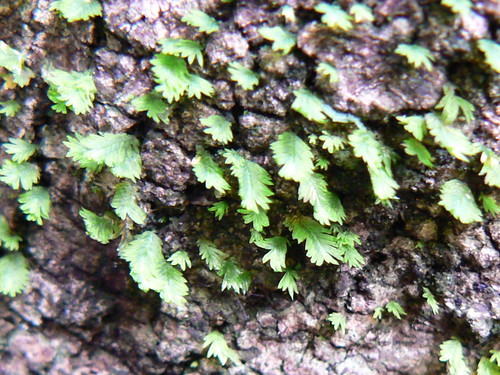
Here are moss and what I'm pretty sure are
hornworts, which comprise the pale green flattened lobes and horn-like capsules in which the spores are produced.